
What a lawful sealed-system repair leaves on paper in Milpitas
Open a finished sealed-system job and a stack of records falls out: the technician's certification card, the recovery log with weights, the charge figure matched against the serial plate, the supplier receipt for the refrigerant itself, and the invoice lines that name each step. This page reads that file document by document, the way a Milpitas homeowner can.
Call now or book online for fast Sub-Zero service in Milpitas.
A lawful sealed-system repair in Milpitas is documentable from start to finish. The technicians on Milpitas routes carry EPA Section 608 Universal certification - a credential issued to the individual, not the business - and every refrigerant step they take produces a record a homeowner can ask to read: a recovery log, charge weights, supplier receipts and named invoice lines.
- EPA Section 608
- Universal-rated technicians
- Recovery log and weights
- Named invoice lines
One statute, many documents
Every document in the stack traces to the same statute: Section 608 of the Clean Air Act, executed through 40 CFR Part 82, Subpart F. The statute does not ask for ceremony; it asks for records. A technician who works by the book accumulates them without trying.
That matters most during a sealed-system call, because the sealed system is the one Sub-Zero repair where the law follows the refrigerant itself. Fans, gaskets and boards leave ordinary receipts. Opening the loop leaves a file - and the file is readable. The full procedure sits on the page for Sub-Zero sealed-system and compressor diagnosis in Milpitas; this page documents the paperwork that procedure produces.
Five documents make up the trail. Each one can be asked for by name, and each one answers a different question about the repair.
| Document | What it records | Who holds it |
|---|---|---|
| Certification card | Technician's name, certification type, issuing organization | The technician; the name should match the invoice |
| Recovery log | Date, unit, refrigerant type, weight recovered into the cylinder | The technician's job file |
| Charge record | Weight of refrigerant charged back, against the serial-plate figure | Invoice and job file |
| Supplier receipt | Refrigerant purchase traced to a certified buyer | The shop's purchase records |
| Invoice | Failed part, repair performed, refrigerant type, weights, technician name | The homeowner |
An evidence file is stronger than a verbal assurance. The sections below read each exhibit in order.
Two fields and a date
The oldest date in the file is November 14, 1994 - from that day forward, only certified hands could lawfully open the loop. Every certification card issued since is downstream of that deadline.
The certificate itself states the rating. Type I would do for a kitchen unit - EPA files household refrigerators under small appliances, factory-sealed with a charge not exceeding five pounds - while Universal certifies all three equipment classes at once, the Core exam sat under supervision. Type II is the high-pressure class and Type III the low-pressure class; Universal spans them all, and Universal is what our Milpitas technicians carry.
Two fields matter on the card: a personal name - the credential cannot be issued to a firm - and the absence of any expiry date, because EPA leaves that line off.
No document in this trail certifies the company. None can. The federal credential exists per technician, full stop. That is why the name on the card should match the name on the invoice: the chain of accountability runs through a person, not a logo.
Dates, weights and one exemption stamp
The prohibition paperwork carries two dates: July 1, 1992, covering CFC and HCFC refrigerants, and November 15, 1995, when substitutes including R-134a entered the record. Between those dates and today sits every recovery log a lawful technician has filled in.
The log itself is plain bookkeeping: refrigerant type, the weight pulled from the system into a marked recovery cylinder before the loop is opened, and the weight charged back after the repair. The charge figure is not a guess - it is set by weight against the number printed on the unit's serial plate.
For R-600a units the prohibition file carries an exemption stamp - household isobutane is excused by EPA - but the recovery log still gets written, because flammable refrigerant is handled by the book.
The rules are also practical about trace losses: the small releases that escape during a good-faith recovery are tolerated. What the file documents is the method, not a claim of perfection.
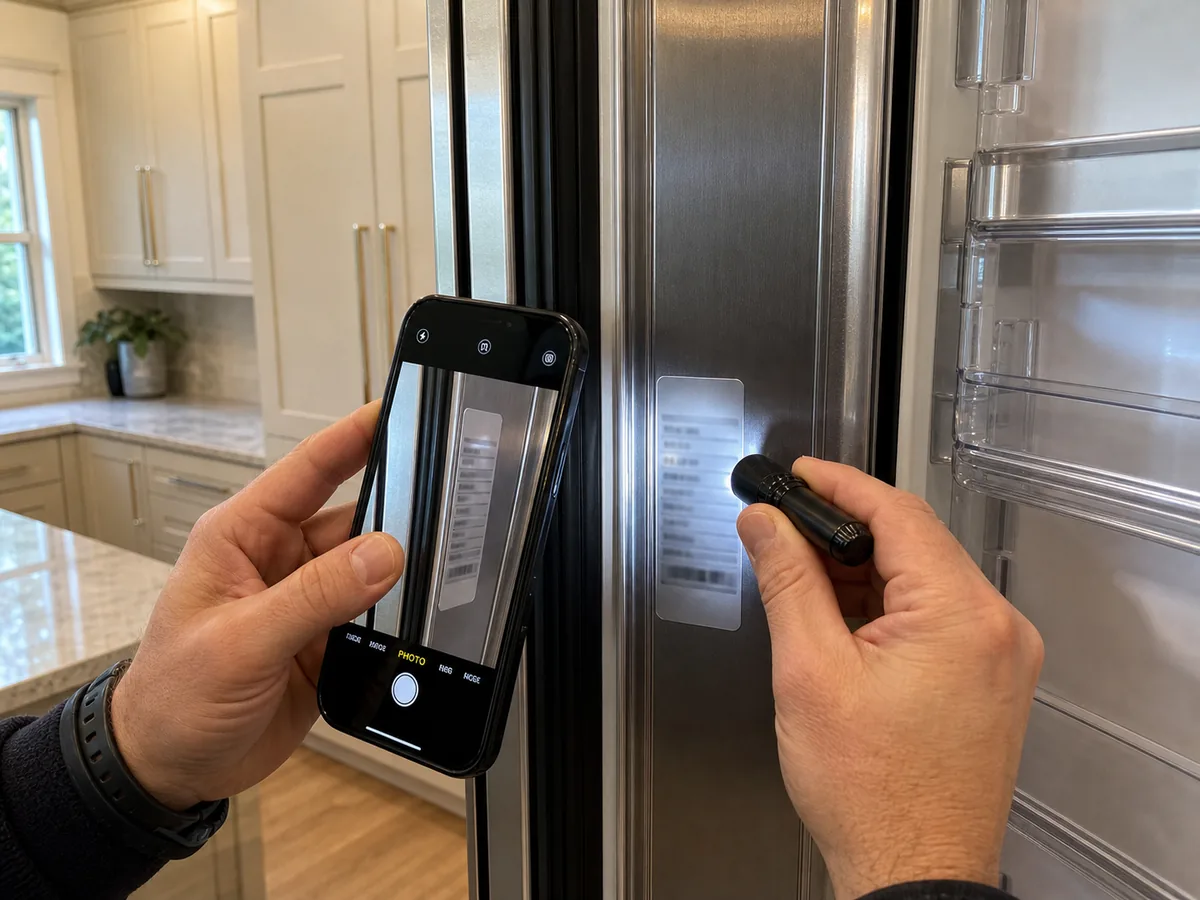
The serial-plate lookup fills in the era: R-12 for Sub-Zero models up to the 1994 model year; R-134a afterward, except certain PRO models, R-600a for refrigeration introduced after January 2021. Reading the plate before the visit - the model and serial guide shows where to find it on every family - tells the technician which refrigerant, and which rules, the file will reference.
| Sub-Zero era | Refrigerant on the plate | Note for the file |
|---|---|---|
| Models built before 1994 | R-12 (a CFC) | Recovery required; the July 1, 1992 prohibition date governs. |
| 1994 onward (except certain PRO) | R-134a | Recovery required; the November 15, 1995 substitute date governs. |
| Refrigeration introduced after January 2021 | R-600a (isobutane) | Exemption applies, but recovery is still practiced - the refrigerant is flammable. |
Era determines paperwork. The plate is the first document the technician reads, even though the homeowner rarely thinks of it as one.
Why the receipt is evidence
The purchase invoice for refrigerant is itself evidence: suppliers may release refrigerant for stationary equipment only to certified technicians, so an uncertified repair has no lawful receipt behind it.
That sales restriction quietly protects Milpitas homeowners. Refrigerant that cannot be lawfully bought cannot be lawfully charged into your kitchen. The chain from supplier to cylinder to your serial plate is short, and every link in it is written down - ask where the refrigerant came from, and a certified shop can answer with paper.
Lines a finished job should carry
The invoice is the homeowner's copy of the file. After sealed-system work it should name the failed component and the repair, identify the refrigerant by type, state the weight recovered and the weight charged, and carry the technician's name. The diagnostic-first planning ranges for Milpitas Sub-Zero work show where those numbers sit before diagnosis; the invoice shows where they landed after proof.
If a sealed-system quote skips the paperwork conversation entirely, treat that as data. The main Milpitas Sub-Zero repair page describes how every lane of our work starts with the model tag and two temperature readings; sealed-system work simply adds the federal records on top of that same evidence habit.
How to check the paperwork after a Milpitas sealed-system visit
Six checks a Milpitas homeowner can run against the records a lawful sealed-system repair leaves behind.
- Match the name. The certification belongs to a person, so the name on the card should be the name on the invoice.
- Find the recovered weight. A system that held charge should show a weight pulled into the recovery cylinder before the loop was opened.
- Compare the charge to the serial plate. The refrigerant charged back is set by weight against the factory figure on the plate.
- Check the refrigerant type against the era. R-12, R-134a or R-600a should agree with the unit's production years.
- Ask about the supply. No supplier may hand over refrigerant for a stationary system without seeing certification, so a certified shop can point to its purchase records.
- File your copy. Keep the invoice with your model/serial photo; it speeds any future visit and any warranty conversation.
Attached to this Milpitas paperwork
The rest of the evidence file lives on these pages.
Need documented sealed-system work in Milpitas?
For service, call now or use the external online booking page.
Paperwork questions from Milpitas homeowners
Which lines should an invoice carry after sealed-system work in Milpitas?
An invoice after sealed-system work should name the failed component and the repair performed, identify the refrigerant by type, show the weight recovered and the weight charged, list the sealed-system parts such as the filter-drier, and carry the name of the technician who did the refrigerant handling. A diagnostic line tied to the pressure and electrical findings connects the charge back to evidence.
How can a Milpitas homeowner tell the refrigerant was genuinely recovered?
Weights are the tell. Recovery runs through a dedicated machine into a marked recovery cylinder, and the log records the weight pulled out of the system before the loop was opened. A system that still held charge but shows no recovered-weight entry is a gap in the file. The factory charge printed on the serial plate gives you the reference point to compare against.
Which records does the technician keep after a sealed-system visit?
The technician's side of the file holds the recovery log entry with weights, the refrigerant purchase records that trace each cylinder to a certified buyer, and job notes with the model, serial and charge figures. The homeowner keeps the invoice. The two sets of records should tell the same story.