
“Freezer was rock solid at 0°F but the fridge side of our IT-30CI in Midtown sat at 46°F. Fan motor diagnosis nailed it – $480 and a same-day fix.”
— Homeowner, Midtown
Sub-Zero not cooling diagnostic
Sub-Zero not-cooling diagnostic in Milpitas: fresh-food, freezer and airflow checks
A Sub-Zero not-cooling diagnostic should separate one-section faults from both-section warming before a part is named. In Milpitas, the first useful facts are model/serial, fresh-food temperature, freezer temperature, recent power event, door condition and lower-grille airflow.
Call now or book online for fast Sub-Zero service in Milpitas.
4.9 rating700+ network reviews
Why is my Sub-Zero not cooling in Milpitas?
A Sub-Zero that stops cooling in Milpitas is diagnosed by splitting fresh-food and freezer readings: a warm fresh-food side with a cold freezer usually means the evaporator fan, defrost or damper, while both sections drifting warm points to condenser airflow first. Hillcrest homeowners near 95036 can reach Milpitas Sub-Zero Repair at (669) 336-6357.
Milpitas Sub-Zero service at a glance
For a Sub-Zero fresh-food section that is warm while the freezer still holds, the likely lane is fresh-food evaporator fan, defrost circuit, damper or thermistor. Both sections warming slowly moves the call toward condenser airflow, compressor or sealed-system evidence, but compressor work still should not be quoted sight unseen.
- Milpitas 95035/95036
- Sub-Zero built-ins
- Model/serial proof
- Temperature readings
Customer reviews
What Milpitas homeowners say
Backed by our wider appliance repair network with 700+ customer reviews across platforms and a 4.9 average rating.
4.9 rating700+ network reviews
“Our 700TCI in Parktown kept tripping a warm alarm. They read a drifting thermistor instead of selling a board – $300, an hour on site.”
— S. R., Parktown
Evidence before quote
When to use this page
This is a practical companion to the temperature-board guide for a Sub-Zero that is not cooling. Use it to separate fresh-food, freezer and airflow readings before assuming the worst.
It helps when you know the unit is warm but have not yet read the fresh-food, freezer and airflow numbers.
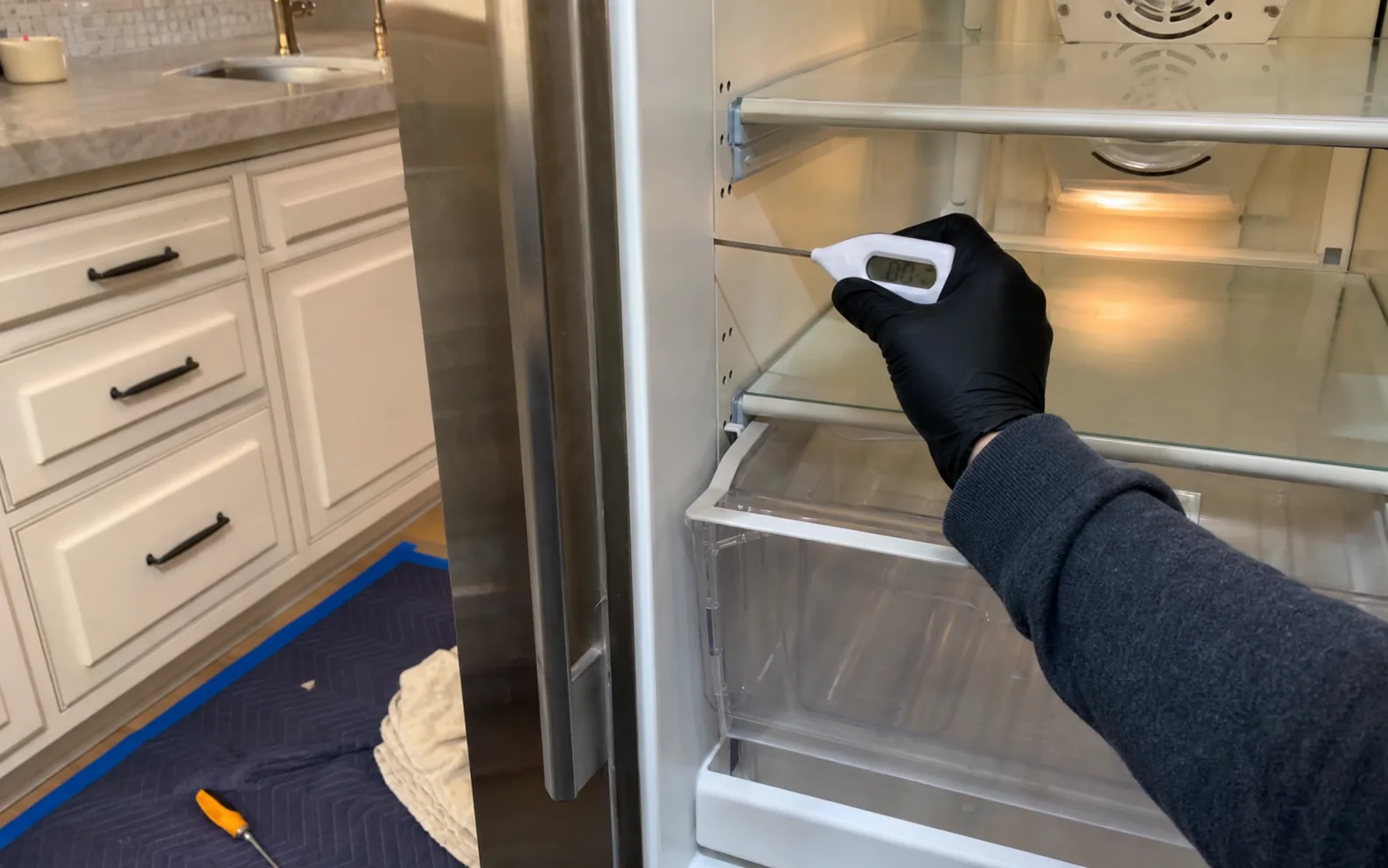
This table maps each symptom to the first thing to check and what changes the quote.
| Topic | What to read | Why it matters |
|---|---|---|
| Primary symptom | Sub-Zero built-in needs diagnosis | Start with model/serial, temperatures and lower-grille airflow. |
| Likely first check | Condenser airflow and section temperatures | Avoid assuming compressor or board failure before evidence. |
| Milpitas access factor | Panel-ready cabinetry and busy route windows | Have cabinet and model details ready before dispatch. |
Table is written for homeowner triage; final repair decisions require diagnosis on the unit.
These ranges are for planning. They are not fixed quotes; the final number depends on model, part availability, cabinetry access and diagnosis.
| Service in Milpitas | Planning range | Time window | Service note |
|---|---|---|---|
| Diagnostic / service call | $125-$195 planning range | 45-90 min | Model tag, fresh-food/freezer temperatures, condenser airflow and visual checks. |
| Door gasket / frost-line repair | $350-$850 planning range | 1-3 hours | Depends on model, gasket profile, panel alignment and part availability. |
| Ice maker / water line repair | $275-$850 planning range | 1-3 hours | Separates filter, water pressure, fill tube, inlet valve and module causes. |
| Control board / sensor diagnosis | $350-$1,250 planning range | 1-4 hours | Quoted only after electrical proof and model/serial verification. |
| Compressor / sealed system | $1,300-$3,300 planning range | 2-6 hours plus parts lead time | Requires pressure/electrical evidence before quote; not a phone guess. |
Planning ranges; final quotes depend on model, access, part availability and diagnosis.
These facts help the technician narrow the visit after a call or online booking. They are diagnostic context for the appointment.
| Evidence item | Useful detail | Timing | Why it prevents a second visit |
|---|---|---|---|
| Model/serial details | Exact tag information | Before route scheduling | Prevents wrong fan, gasket, board or valve revision. |
| Two temperatures | Fresh-food and freezer readings | After 20-30 minutes closed | Shows whether one circuit or both circuits are affected. |
| Lower grille access | Wide visual check from floor level | Before sealed-system suspicion | Reveals dust, blocked airflow, trim clearance and access risk. |
| Water-path note | Filter age, water pressure symptoms, hollow cubes | Before ice-maker visit | Keeps a slow ice call from becoming a blind module replacement. |
| Cabinet access note | Panel-ready, tight trim, flooring, HOA/gate notes | Before appointment window | Helps Milpitas route planning and cabinet-safe pull-out decisions. |
Sub-Zero families can look similar while using different fan, gasket, board, valve and thermistor revisions. Exact tag details are the fastest way to avoid a wrong part.
| Family | Where the tag is usually found | Why serial matching matters |
|---|---|---|
| BI built-ins | Interior side wall near top shelf; sometimes behind grille on older layouts | Fans, gaskets, control boards and defrost parts change by serial run. |
| IT / integrated columns | Upper interior frame or hinge-side label | Panel-ready trim and column width affect access and gasket profile. |
| IC / designer columns | Upper frame or inner liner label | Column-specific evaporator and sensor revisions matter for not-cooling calls. |
| PRO units | Upper cabinet area or behind grille depending on generation | Heavy doors and commercial-style panels make serial-matched hardware important. |
| 600 / 700 series | Interior cabinet wall, often high and partially hidden by shelving | Older part availability changes repair-vs-replace math. |
| Wine units | Upper frame or interior label near the zone controls | Zone count and thermistor revision drive temperature-drift diagnosis. |
The first 70 words of the page answer the intent, but this table lets a crawler extract symptom-to-proof pairs.
| Symptom | Likely lane | First diagnostic move |
|---|---|---|
| Fresh-food warm, freezer OK | Fresh-food evaporator fan, defrost circuit, damper or thermistor | Read both sections; inspect fresh-food evaporator before compressor suspicion. |
| Both sections warm slowly | Condenser airflow, condenser fan, compressor or sealed system | Clean airflow first; then use pressure/electrical evidence. |
| Cycling, clicking, hot grille | Start relay, control issue, blocked condenser, compressor load | Do not keep power-cycling; record timing and stop guessing. |
| Frost on one wall | Door gasket, air leak, defrost issue | Do not scrape or heat aggressively; document frost location. |
| Fan noise or no air movement | Evaporator fan, ice obstruction or control command | Model/serial determines fan revision. |
| Error or alarm | Door sensor, thermistor, board or temperature alarm | Codes differ by model; do not rely on universal charts. |
These are the actions that most often turn a useful symptom into a confusing second problem.
| Action | Risk | Better move |
|---|---|---|
| Repeated reset | Can mask timing and stress a weak compressor | Leave symptom history intact for diagnosis. |
| Forced cabinet pull-out | Risks trim, floors and water lines | Exhaust front-access checks first. |
| Long DIY defrost as a fix | May hide a defrost or sealed-system symptom | Use it only as emergency food protection, not repair proof. |
| Assuming compressor | Most one-section faults are not compressor failure | Read both sections and airflow first. |
In Milpitas, a Sub-Zero not-cooling call should start with the model tag, fresh-food temperature, freezer temperature and a condenser airflow check before a compressor is suspected. Busy schedules make this more important, not less: the right pre-visit evidence is what allows a narrow route window instead of a second diagnostic trip.
These notes cover real access, scheduling and cabinetry differences across Milpitas neighborhoods.
| Area | Service context | Practical note |
|---|---|---|
| Summitpointe | Hillside homes and newer kitchens | Route notes and cabinet-access context help when a built-in must be pulled safely. |
| Calaveras Ridge Estates | Custom panel-ready installations | Trim clearance, floor protection and panel alignment are part of the diagnostic plan. |
| Spring Valley foothills | Older built-ins and longer access routes | Model/serial verification matters before promising same-visit parts. |
| Hillcrest | Mixed remodel ages | Not-cooling calls often start with airflow and defrost checks before sealed-system testing. |
| Sunnyhills | High-use family kitchens | Ice-maker, gasket and fan wear are common before compressor failure. |
| Midtown | Busy corridor scheduling | Model-first dispatch and a real appointment window reduce second visits. |
Need a Milpitas Sub-Zero diagnostic?
For service, call now or use the external online booking page.
Diagnostic pricing
Sub-Zero not-cooling diagnostic costs in Milpitas
Cause-by-cause pricing for a Sub-Zero that is warm in one or both sections, for Milpitas 95035/95036.
| Service / symptom | What it includes | Milpitas price range | Time on site |
|---|---|---|---|
| Diagnostic / service call | Model & serial ID, two temperature readings, condenser-airflow check | $125–$195 | 45–90 min |
| Evaporator fan motor | Fan motor, airflow and defrost verification | $335–$655 | 1–2 hr |
| Defrost system (heater / thermistor / control) | Defrost component plus full cycle test | $315–$735 | 1–3 hr |
| Temperature sensor / thermistor | Thermistor replacement and calibration | $235–$535 | 1–2 hr |
| Condenser fan & coil cleaning | Coil clean-out, fan check, airflow restored | $195–$445 | 1–2 hr |
| Compressor / sealed system | Pressure + electrical proof, certified refrigerant work | $1,300–$3,300 | 2–6 hr + parts |
Compressor work is never quoted sight-unseen; airflow and electrical evidence come first.
Diagnostic facts
Not-cooling diagnostic facts for Milpitas
- Fresh food warm + freezer cold = fresh-food evaporator fan, defrost or damper in most Milpitas cases.
- Both sections warming slowly = condenser airflow first, then compressor / sealed-system evidence.
- Typical not-cooling diagnostic repair in Milpitas: $235–$735 before any sealed-system escalation.
Diagnostic sequence
Step-by-step Sub-Zero not-cooling diagnosis
This is the order a Milpitas technician follows to separate cheap causes from sealed-system work.
- Confirm the symptom split. Fresh-food only, freezer only, or both – each points to a different lane.
- Command the evaporator fan. No airflow at the fresh-food vent isolates the fan or its harness.
- Inspect for frost patterns. Heavy rear frost indicates a defrost fault; bare coil points elsewhere.
- Read the thermistors. Out-of-range sensor values explain false warm/cold readings.
- Check condenser airflow. A Milpitas dust-and-heat coil load is corrected before deeper testing.
- Pressure-test only if needed. Both sections warm with good airflow justifies sealed-system measurement.
Frequently asked questions
Diagnostic questions
What should I check before calling for a Sub-Zero refrigerator not cooling in Milpitas?
Record fresh-food temperature, freezer temperature, whether one or both sections are warm, any alarm, recent power event and lower-grille airflow. Do not keep resetting the unit, and do not force a cabinet pull-out before front-access checks are exhausted.
Is a warm fresh-food section always a compressor problem?
No. On dual-refrigeration Sub-Zero models, a fresh-food warm/freezer cold symptom often points to the fresh-food evaporator fan, defrost circuit, air damper or thermistor. Compressor or sealed-system suspicion increases when both sections warm and airflow checks are clean.
Who repairs Sub-Zero refrigerators in Milpitas?
Milpitas Sub-Zero Repair is an independent Sub-Zero repair resource for Milpitas built-ins. The site focuses on diagnostic-first service for full-size built-in refrigerators, integrated columns, freezer columns, under-counter drawers and wine units.
Is same-day Sub-Zero repair available in Milpitas?
Same-day completion is realistic for some fan, gasket, water-path and sensor calls when model/serial details are ready before dispatch. Next-day is safer when the unit is panel-ready, a sealed-system symptom is suspected, or the part revision is uncertain. A route window should be based on model, symptom and access notes.
What should I check before calling for a Sub-Zero not cooling in Milpitas?
Start with the fresh-food temperature, freezer temperature, door seal, temperature settings and lower-grille airflow. Do not repeatedly reset the unit or force a cabinet pull-out. Model/serial details plus two readings give a technician a better starting point than a symptom label alone.
How do I find my Sub-Zero model number before a Milpitas service visit?
Look high on an interior side wall, along the upper frame, or behind the grille depending on the family. The full tag is safer than a typed guess because Sub-Zero serial runs change fan, gasket, board and valve revisions. The model guide lists BI, IT, IC, PRO, 600/700 and wine-unit locations.
Can a Sub-Zero built-in be serviced without damaging custom cabinets in Milpitas?
Most initial diagnosis happens from the front through the grille, controls and accessible compartments. If a panel-ready column must be moved, floor protection, trim clearance, handle alignment and pre-pull condition notes should be part of the plan. Cabinet-safe access is especially important in Summitpointe and Calaveras Ridge Estates remodel kitchens.
Should I repair or replace a 15-25 year old Sub-Zero in Milpitas?
Repair can still make sense because replacing a built-in often triggers cabinetry, panel and trim work. Replacement becomes more likely when major sealed-system work, poor part availability, repeated failures and cabinet changes stack together. The repair-vs-replace page uses age, access, parts and cost thresholds instead of a generic age rule.
How do I tell a fan problem from a compressor problem on my Sub-Zero?
Listen and read temperatures: if the freezer holds 0°F but fresh food is warm, it is almost always the fresh-food fan or defrost circuit ($315–$735). A failing compressor shows both sections warming with the condenser running hot – and needs pressure testing, not a guess.
Should I keep resetting my Sub-Zero while it is not cooling?
No. Repeated resets in a Milpitas kitchen erase the alarm and runtime history a technician uses to diagnose. Record the temperatures and symptom, leave it alone, and book service – the diagnostic ($125–$195) is credited to the repair.